

Nail fungus—clinically referred to as onychomycosis—is one of the most common nail conditions evaluated in podiatric practice. It can be persistent, slow to treat, and frustrating for patients, particularly when nails become thickened, discolored, brittle, painful, or cosmetically concerning. Importantly, not all abnormal or thickened nails are fungal in origin.
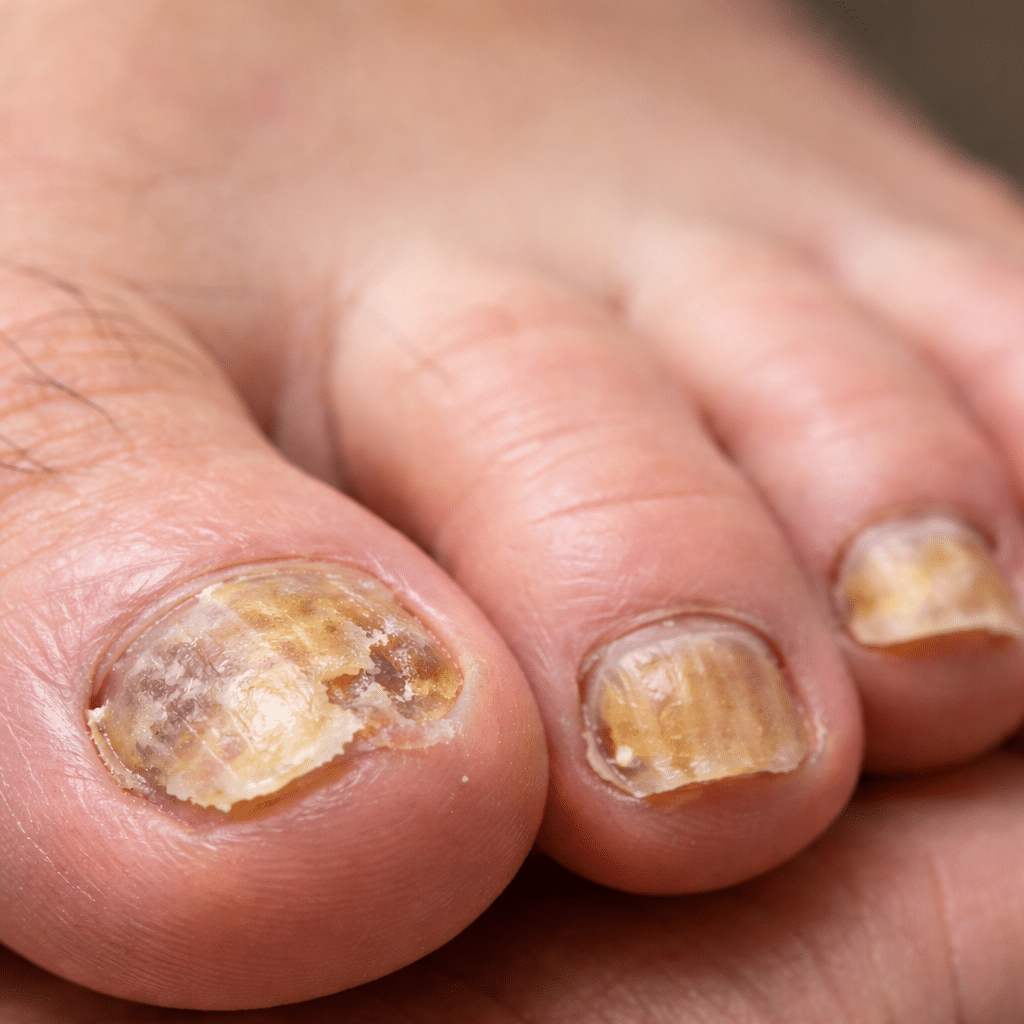
This article is intended to provide general educational information regarding nail fungus, including common causes, organisms involved, the role of trauma and nail barrier disruption, and an overview of commonly discussed treatment options.
What Causes Nail Fungus?
Onychomycosis develops when organisms gain access to the nail unit and are able to persist in an environment favorable to growth. Several well-recognized factors may increase susceptibility.
Repetitive Nail Trauma
Repetitive micro-trauma to the nail plate or nail matrix may occur from:
- Running or athletic activity
- Tight or ill-fitting footwear
- Occupational footwear or prolonged standing
Trauma alone can permanently alter nail growth, leading to thickening or discoloration even without infection. These changes may resemble fungal disease and can coexist with it.
Footwear & Environmental Factors
Fungal organisms thrive in warm, dark, and moist environments. Risk factors may include:
- Prolonged time in enclosed shoes
- Limited ventilation
- Repeated sock wear
- Exposure in communal environments such as locker rooms, pools, and shared showers
Uncontrolled Athlete’s Foot (Tinea Pedis)
Chronic or untreated athlete’s foot is a recognized risk factor. In some cases, infection may spread from the skin of the foot to the nail over time.
Nail Salon Treatments, Nail Trauma & Barrier Considerations
Beyond instrument hygiene, some clinicians have discussed the role of repeated nail trauma and disruption of the nail’s natural protective barriers in nail disease. The cuticle, eponychium, hyponychium, and lateral nail folds serve as biologic seals that help limit microbial access to the nail bed and nail matrix.
Certain cosmetic nail practices—such as aggressive cuticle trimming, deep cleaning beneath the nail plate, or manipulation of surrounding nail folds—may disrupt these protective structures. From an anatomic and physiologic standpoint, disruption of these barriers could theoretically increase susceptibility to microbial exposure, particularly when combined with other known risk factors.
It is important to emphasize that this represents clinical reasoning and hypothesis, not a proven cause-and-effect relationship. Nail fungus is a multifactorial condition, and many individuals receive nail salon services without developing infection.
However, if protective barriers are disrupted and the foot is subsequently placed into a warm, enclosed shoe environment—especially footwear that may already harbor fungal elements—this combination may contribute to increased risk over time. Preserving the integrity of the nail’s natural protective structures is therefore considered a reasonable preventive principle in overall nail health.
This discussion is not intended to discourage nail salon care or assign fault, but rather to highlight an often overlooked aspect of nail anatomy and barrier protection.
Common Organisms Associated With Nail Infection
Dermatophytes (Most Common)
- Trichophyton rubrum
- Trichophyton mentagrophytes
These organisms account for the majority of confirmed fungal nail infections.
Non-Dermatophyte Molds
- Fusarium
- Aspergillus
- Scopulariopsis
These organisms are more commonly associated with nails that have experienced prior trauma or chronic nail disease.
Yeast
- Candida species
Yeast involvement is more commonly seen in fingernails or chronically moist environments and may respond differently to treatment.
When Nail Changes Are Not Purely Fungal
Clinically, it is important to distinguish between:
- Primary traumatic nail dystrophy
- Primary fungal infection
- Trauma with secondary fungal colonization
Injury to the nail matrix may permanently alter nail growth patterns, producing thickened or discolored nails that resemble fungal disease. In some cases, a secondary fungal infection may later develop.
Overview of Commonly Discussed Treatment Approaches
Oral Antifungal Medications
Oral antifungal medications, such as terbinafine, are commonly discussed in the treatment of confirmed dermatophyte nail infections. Peer-reviewed medical literature demonstrates favorable outcomes when these medications are prescribed appropriately.
These medications are metabolized through the liver, and patient screening, medication review, and laboratory testing may be performed when clinically indicated. Current evidence suggests that concerns primarily relate to medication interactions rather than routine liver injury in otherwise healthy individuals.
Topical Antifungal Treatments
Topical options may include over-the-counter antifungal products and prescription topical solutions. These treatments are generally better suited for mild or superficial nail involvement and require long-term, consistent use.
Home Remedies
Some individuals attempt home remedies such as tea tree oil or topical ointments. While limited laboratory data suggest possible antifungal properties, clinical results are variable, and these approaches are not reliably effective for established nail infections.
Class IV Laser Therapy
Class IV laser therapy is a non-invasive option that uses photobiologic and thermal mechanisms and may be used alone or in combination with other treatments, depending on individual circumstances.
Temporary Nail Removal
In select cases, temporary removal of a severely damaged nail may be considered to reduce discomfort or allow topical treatments direct access to the nail bed. Nail regrowth occurs gradually over time.
Why Nail Fungus Can Be Challenging to Treat
- Nails grow slowly
- Trauma often continues
- Organisms may be protected beneath thickened nail plates
- Mixed causes can complicate treatment response
Successful management depends on identifying contributing factors and tailoring treatment accordingly.
Key Educational Takeaways
- Not all thickened or discolored nails are fungal
- Nail trauma alone can permanently alter nail appearance
- Fungal infections may involve different organisms
- Treatment approaches vary based on individual factors
- Preserving nail barrier integrity is an important preventive concept
Educational Disclaimer
This content is provided for general educational purposes only and is not intended as medical advice, diagnosis, or treatment. Individual conditions vary, and readers should consult a qualified healthcare professional for personalized evaluation and care.