

Regenerative medicine at Sorenson Foot & Ankle focuses on supporting the body’s natural healing response through advanced, non-surgical technologies. These therapies are designed to help reduce pain, improve function, and support tissue recovery when appropriate. All regenerative treatments are provided only after a comprehensive medical evaluation and are tailored to each patient’s diagnosis, clinical findings, and treatment goals.
Our approach emphasizes ethical, evidence-informed care with realistic expectations and patient safety as the highest priorities.
A Thoughtful, Individualized Approach
Regenerative medicine therapies are not one-size-fits-all solutions. At Sorenson Foot & Ankle, these treatments are integrated into a broader care plan that may include biomechanical evaluation, custom orthotics, physical therapy, activity modification, medications, or procedures when indicated.
Not all patients are candidates for regenerative therapies. Treatment recommendations are made only after evaluation by a licensed physician and are based on clinical judgment, current evidence, and individual patient needs.
The Remy® Class IV Laser
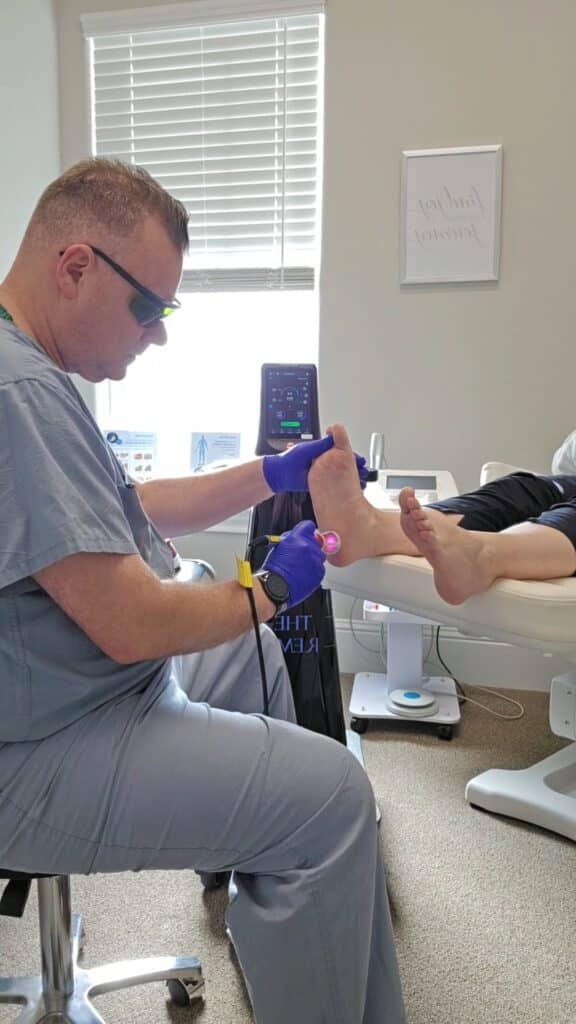
At Sorenson Foot & Ankle, we utilize the Remy® Class IV Laser, an FDA-cleared therapeutic laser used in podiatric and musculoskeletal care. This technology delivers controlled light energy to targeted tissues through a process known as photobiomodulation.
Laser therapy may help support cellular activity, improve local circulation, and reduce inflammation in treated areas. It is non-invasive, does not require injections or medications, and is typically incorporated into a comprehensive treatment plan rather than used as a standalone therapy.
Common indications for laser therapy may include:
- Plantar fasciitis
- Achilles tendon disorders
- Tendonitis and ligament strains
- Arthritis-related foot and ankle pain
- Chronic soft-tissue injuries
- Post-operative healing support, including reduction of inflammation, swelling, and discomfort following foot and ankle procedures
Laser therapy may be used during post-operative recovery as an adjunct to standard surgical aftercare when clinically appropriate.
Individual results vary. Laser therapy does not replace surgical intervention when surgery is indicated
Red Light Therapy — Powered by RedVive
Recovery doesn’t stop when you leave our office. At Sorenson Foot and Ankle, we’re proud to bring RedVive’s clinical-grade photobiomodulation (PBM) technology into your care plan — a light-based therapy that works at the cellular level to help your body heal faster, move easier, and get back to the life you love.
How It Works
RedVive delivers precise, clinically studied red and near-infrared wavelengths directly to injured or fatigued tissue. Your cells absorb this light energy and convert it into ATP (adenosine triphosphate) — the fuel your body uses to repair tissue, calm inflammation, and regenerate faster. It’s a simple, comfortable session with no needles, no incisions, and no downtime.
The Benefits
- Accelerates Cellular Healing — Boosts ATP production so damaged tissue repairs itself faster.
- Calms Inflammation — Supports a healthy, balanced inflammatory response without medication.
- Improves Local Circulation — Enhances blood flow, delivering more oxygen and nutrients to the areas that need it most.
- Zero Downtime — Walk in, relax for your session, and walk out ready for your day — no recovery time required.
- Built to Complement Your Treatment Plan — Pairs seamlessly with in-office therapies like Remy Laser and other regenerative treatments for a complete recovery strategy.
Conditions We Treat with Red Light Therapy
- Plantar fasciitis and chronic heel pain
- Achilles tendonitis and tendon injuries
- Neuropathic foot pain
- Acute sprains and soft-tissue strains
- Slow-healing wounds
- Post-surgical recovery support
Why We Chose RedVive
We selected RedVive for its clinical-grade output and precision wavelengths — the same standard trusted by leading regenerative medicine and podiatric practices nationwide. It’s technology built for real results, giving our patients another powerful tool to preserve an active lifestyle.
Ready to Move Without Limits?
If pain is slowing you down, Red Light Therapy may be the missing piece in your recovery plan. Schedule a consultation with Dr. Ernest Sorenson today and step into elevated care.
Sorenson Foot and Ankle | 31332 Nichols Sawmill Road, Suite B, Magnolia, TX 77355 | (936) 233-8886
Proudly serving Magnolia, Spring, North Houston, The Woodlands, Conroe, Tomball, Montgomery, Waller, and Hockley County.
Se habla Español.
Radial Shockwave Therapy
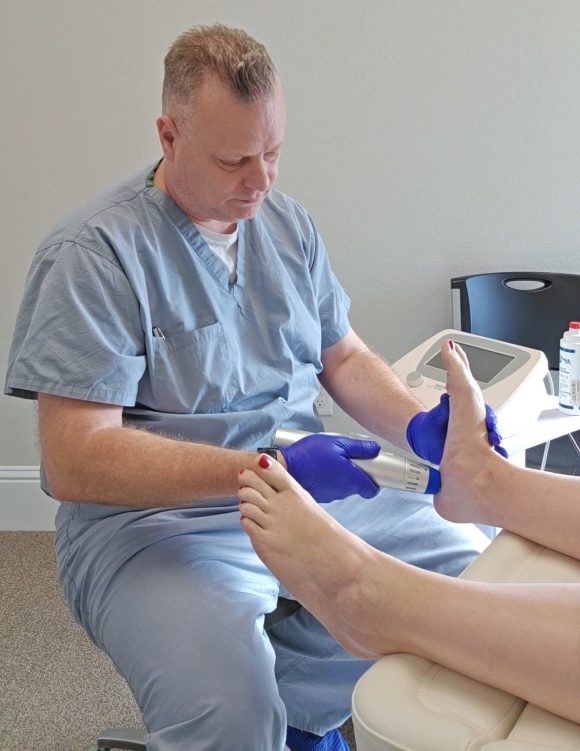
Radial Shockwave Therapy is a non-invasive treatment that uses acoustic pressure waves to stimulate biological responses in targeted tissues. This therapy is commonly used for chronic foot and ankle conditions that have not responded adequately to traditional conservative care.
Radial shockwave therapy may help promote local blood flow, reduce chronic soft-tissue pain, and support the body’s natural repair mechanisms. Treatments are performed in the office and typically do not require downtime.
Common indications may include:
- Chronic plantar fasciitis
- Achilles tendinopathy
- Heel pain syndromes
- Certain chronic tendon and soft-tissue injuries
Peptide-Based Support (Adjunctive Therapy)
Peptides are short chains of amino acids that function as signaling molecules involved in various biological processes, including inflammation modulation and tissue support. In select cases, peptide-based therapies may be used as an adjunct to other regenerative treatments.
Peptide therapy is supportive in nature, not curative, and is offered only after physician evaluation. These therapies are not a substitute for surgery, physical therapy, or standard medical care. Not all patients are candidates, and treatment decisions are individualized based on clinical judgment and current evidence.
Treatment Packages Available
For eligible patients, laser therapy packages and shockwave therapy packages are available. Package options are designed to support consistency of care and are discussed in detail during your visit to determine appropriateness based on diagnosis and treatment goals.
Laser Nail Fungus Treatment – Patient FAQ
- How does laser treatment help fungal toenails? Laser energy is directed through the nail to the nail bed with the goal of disrupting fungal activity while preserving surrounding healthy tissue.
- Is laser treatment painful? Laser energy is directed through the nail to the nail bed with the goal of disrupting fungal activity while preserving surrounding healthy tissue.
- Is laser treatment painful? Most patients tolerate treatment well. Some experience mild warmth or tingling during the session.
- How many treatments are needed? Multiple treatments are typically required. The number of sessions depends on nail thickness, severity of infection, and individual response.
- Will my nail look better right away? No. Improvement occurs gradually as the affected nail grows out over several months.
- Does laser treatment cure nail fungus? Laser therapy does not guarantee complete eradication of fungal infection. Results vary, and recurrence is possible. Combining laser treatment with proper nail care and topical therapy may improve outcomes.
- Is laser treatment covered by insurance? Laser treatment for fungal toenails is typically considered elective and is not usually covered by insurance.
Medical Disclaimer
Regenerative medicine therapies are intended to support the body’s natural healing processes. Individual results vary. These treatments are not guaranteed cures and may not be appropriate for all conditions. Some regenerative therapies discussed are not FDA-approved for specific podiatric or orthopedic indications. Treatment recommendations are made only after evaluation by a licensed physician.