

If you’re increasing your mileage and suddenly dealing with lingering soreness, stiffness going downstairs in the morning, or foot and lower-leg pain that just won’t settle, your training might not be the issue at all.
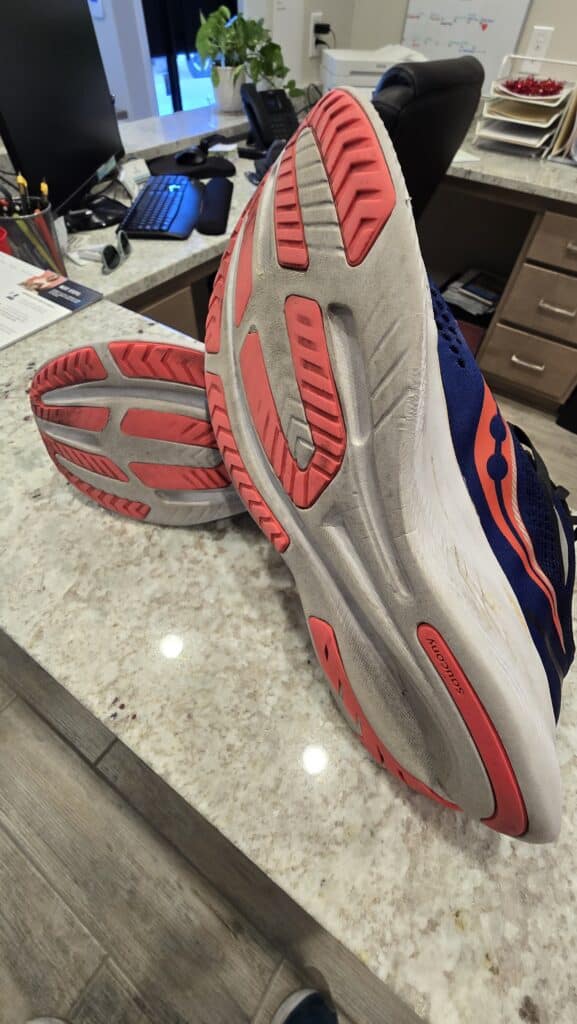
Your shoes might be dead.
Runners often assume new aches are simply part of building mileage. But there’s a well-recognized phenomenon in running and sports medicine circles known informally as “Dead Shoe Syndrome.” It happens when running shoes have passed their functional lifespan and are no longer providing the protection, support, and shock absorption your body needs.
What Is Dead Shoe Syndrome?
Dead Shoe Syndrome refers to pain, soreness, or injury that develops when the cushioning and structure of a running shoe have broken down — even if the shoe still looks fine.
Modern running shoes rely heavily on midsole foam for:
- Shock absorption
- Energy return
- Stability during repetitive impact
Over time, that foam compresses, stiffens, and loses resilience. Once that happens, your legs start absorbing forces the shoe used to handle.
Common Signs Your Running Shoes Are “Dead”
Some of the most common red flags include:
- Persistent foot, ankle, calf, or knee soreness
- Morning stiffness, especially when going downstairs
- Muscles feeling unusually tight or fatigued early in runs
- Pain that doesn’t improve after rest days
- One leg suddenly feeling worse than the other
- Shoes feeling “flat,” harsh, or unsupportive
A key clue:
The pain shows up despite smart training habits and reasonable mileage.
Why This Often Shows Up During Mileage Increases
Dead Shoe Syndrome frequently reveals itself when runners:
- Increase weekly mileage
- Add a long run
- Stack consecutive training days
- Transition into more structured training (like half-marathon prep)
When training load goes up, the margin for error goes down. Shoes that were “good enough” at lower mileage suddenly aren’t protecting you anymore.
This is why soreness during training increases isn’t always caused by training itself — sometimes it’s the equipment failing under higher demand.
A Personal Note (Because This Happens to All of Us)
I started running consistently in October, and even as a foot and ankle specialist, I’ll admit this — I have a bad habit of wearing shoes far too long.
As my mileage increased, I chalked up worsening soreness, difficulty going downstairs in the morning, and constant foot and leg fatigue to “just part of training.” But the pain wasn’t resolving.
When I finally evaluated my shoes honestly, it was obvious they were well beyond their useful life. I replaced them with a new pair and noticed an immediate difference in how my legs felt just walking around during the day.
Even when you know better, it’s easy to overlook the simplest variable.
How Long Do Running Shoes Actually Last?
Most running shoes last approximately:
- 300–500 miles for most runners
- Less if you:
- Are heavier
- Run on concrete frequently
- Wear the same pair daily
- Notice uneven outsole wear
Importantly, shoes can be “dead” before the outsole looks worn.
How to Tell If the Shoe Is the Problem (Not Your Body)
Ask yourself:
- Did this pain appear gradually without a clear injury?
- Does it linger despite rest?
- Did it coincide with higher mileage or longer runs?
- Do your legs feel better in different shoes?
If the answer is yes, your shoes deserve a closer look.
A simple test:
Try wearing a newer or different pair for a full day of walking. If your legs feel noticeably better, that’s valuable information.
What to Do If You Suspect Dead Shoe Syndrome
- Retire worn shoes sooner rather than later
- Avoid “pushing through” unexplained soreness
- Rotate shoes if possible during training blocks
- Be cautious when transitioning into brand-new shoes — ease into them
- Address lingering pain early before it escalates
Shoes are consumables. Treating them as permanent equipment is one of the most common mistakes runners make.
Educational Notice
This article is intended for educational and informational purposes only and is not a substitute for individualized medical advice, diagnosis, or treatment. Running-related pain can have many causes, and what applies to one runner may not apply to another. If pain is persistent, worsening, or affecting your ability to train or function normally, evaluation by a qualified medical professional is recommended.
Final Thought
Not every ache means you’re weak, under-trained, or doing something wrong.
Sometimes your body is telling you the truth:
the shoes are done — and it’s time to listen.